EIGHTH EPISCOPAL DISTRICT
HEALTH MINISTRY (VOL 9)

Dr. Patricia D. McKenzie
Episcopal Coordinator for Health Ministries
PART I.
NATIONAL HEALTH OBSERVANCES FOR SEPTEMBER
A. PROSTATE CANCER AWARENESS MONTH
SOURCE: CENTER FOR DISEASE CONTROL AND PREVENTION (CDC) https://www.cdc/Health
FACTS:
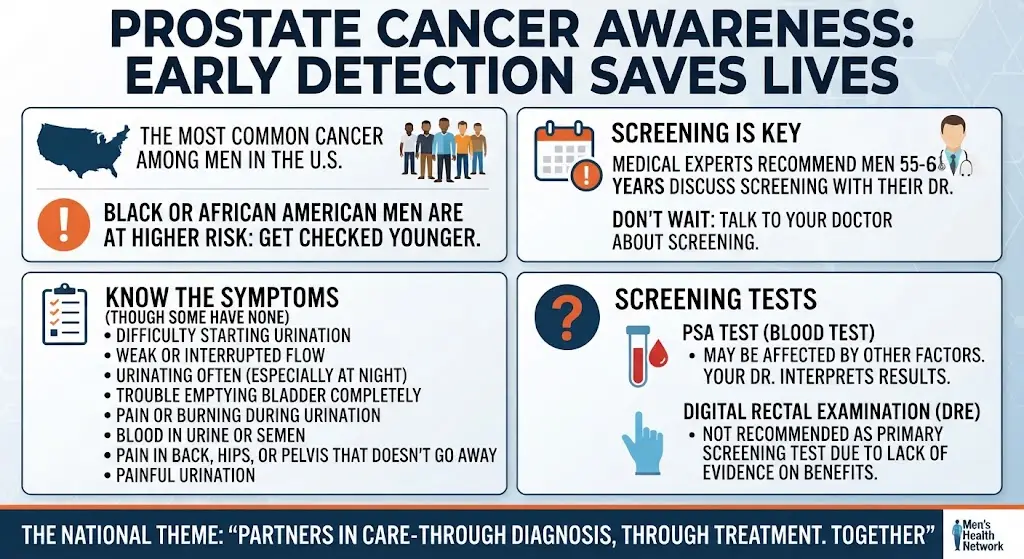
Topic-P. FACTS: “Prostate Cancer is the most common cancer among men in the U.S. The survival rates differ depending on the stage at which the cancer was detected. Screening is important, medical experts recommend men 55 to 69 years discuss screening with their Dr.
Remember: Black or African American men get cancer at a younger age, have a more advanced stage when it is found and are more likely to die from Prostate Cancer.
There are two tests which are commonly used to screen for prostate cancer, talk to your Dr. about the benefit for you. The symptoms vary among men and some men do not have symptoms at all. If you have any of the following symptoms, see your Dr. right away: Difficulty starting urination, weak or interrupted flow of urine. Urinating often especially at night; trouble emptying the bladder completely; pain or burning during urination. Blood in urine or semen. Pain in the back, hips, or pelvis that doesn’t go away. Painful urination. Black or African American men—Don’t Wait Get Checked by Your Dr.! If the cancer runs in your family. Don’t Wait Get Checked by Your Dr. Cancer screening is required to find cancers that may be at high risk for spreading if not treated and to find them early before they spread.
Remember-that with the Prostate Specific Antigen (PSA) test may be affected by other factors such as certain medications, a prostate infection or enlarged prostate. Don’t Wait.: Your Dr. is the best person to interpret your PSA Test results. Another examination is the digital rectal examination, but it is not recommended as a screening test because of the lack of evidence on the benefits.
The National Theme: “Partners in Care-Through Diagnosis, Through Treatment. Together” led by Men’s Health Network.”
⚠️ Important Health Facts to Keep in Mind:
- Higher Risk: Black or African American men are diagnosed at a younger age, present with more advanced stages, and face higher mortality rates. Don't wait—get checked early!
- Family History: If prostate cancer runs in your family, schedule a discussion with your doctor promptly.
- Know the Symptoms: While some men have no symptoms, warning signs can include difficulty starting urination, a weak or interrupted flow, frequent nighttime urination, pain or burning during urination, or blood in the urine or semen.
PART II. NATIONAL ATRIAL FIBRILLATION AWARENESS MONTH
Source: Stop A-Fib
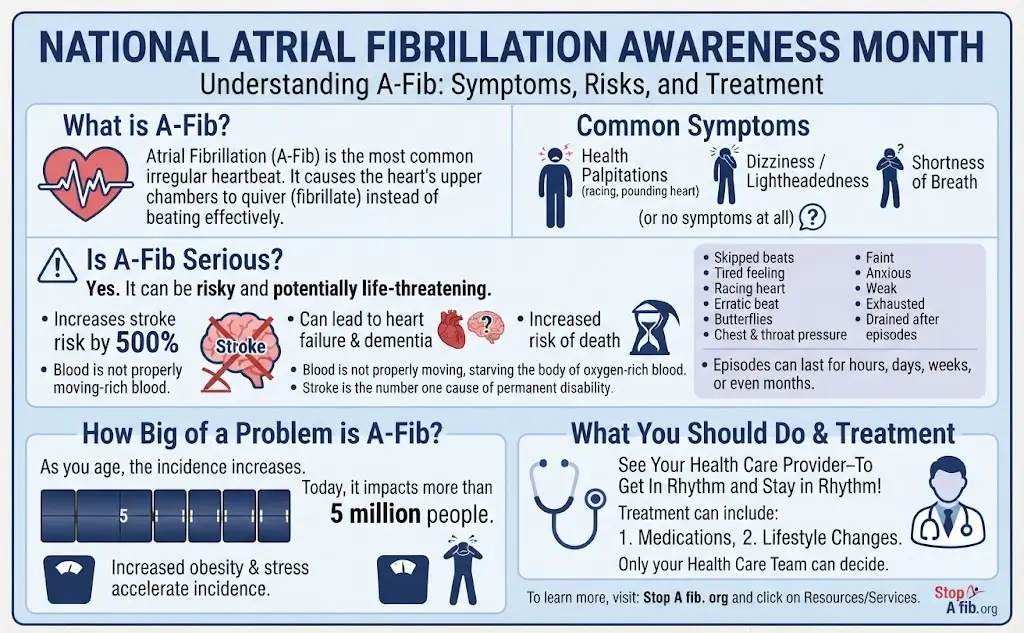
- What it is: Atrial fibrillation (A-fib) is the most common irregular heartbeat.
- Common Symptoms: Heart palpitations, dizziness, and shortness of breath—though some people experience no symptoms at all.
- Patient Experiences: Symptoms vary widely. Some describe skipped heartbeats followed by fatigue, a racing or speeding heart, an erratic rhythm, or “butterflies” in the chest. Others experience chest and throat pressure that mimics a heart attack, leaving them dizzy, faint, lightheaded, anxious, breathless, weak, or exhausted. Episodes can last for hours, days, weeks, or even months.
Is Atrial Fibrillation Serious? Yes, it can be risky and potentially life-threatening. Because blood is not properly pumped through the body, organs can be starved of oxygen-rich blood.
Major Risks: A-fib increases your stroke risk by 500% and can lead to heart failure, dementia, and an increased risk of death. Stroke is currently the number one cause of permanent disability.
Impact: It takes a significant physical, emotional, and financial toll on patients, as well as their families, friends, and caregivers
How Big of a Problem Is It? As people age, the incidence of A-fib increases. Today, it impacts more than 5 million people. Additionally, increasing rates of obesity and stress are expected to accelerate the incidence of A-fib.
What Should You Do?
See Your Healthcare Provider: Work with your doctor to get in rhythm and stay in rhythm.
Treatment Options: Treatment may include medications or lifestyle changes, but only your healthcare team can decide the right plan for you.
- See Your Health Care Provider-To Get In Rhythm and Stay in Rhythm!
- The Treatment can include:
- 1.Medications
- 2. Lifestyle Changes.
PART III.
FOOD SAFETY EDUCATION MONTH
FACTS:
Symptoms may include:
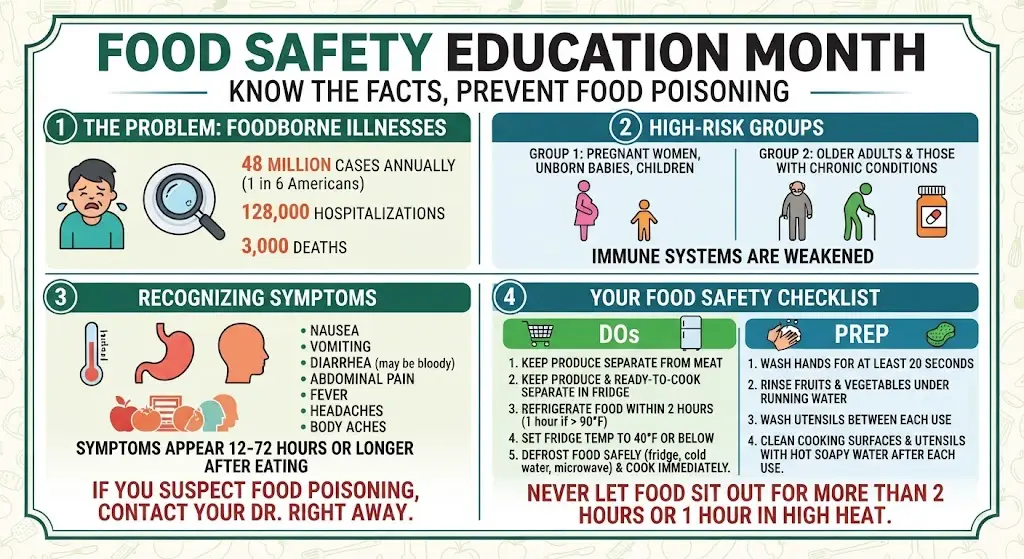
- 1. nausea, vomiting, diarrhea (may be bloody), and abdominal pain.
- 2. Fever, headaches and body aches.
- If you suspect that you have a foodborne illness, contact your Dr. right away. Remember-People 65 and older are at risk of hospitalization and death. Why? The digestive system holds food longer allowing bacteria to grow. After age 75, many adults have an immune system so weakened that they can’t fight the infection.
- You Should Keep Your Food Safe From the Grocery Store to the Kitchen Table.
- DO:
- 1. Keep produce separate from meat
- 2. Keep produce and ready-to-cook in separate areas of the refrigerator
- 3. Refrigerate food within 2 hours of shopping or 1 hour if kept in air temperature above 90.F.
- 4. Set refrigerator temperature to 40 or below.
- 5.Defrost food in the refrigerator, in cold water or in the microwave and cook immediately.
- FOOD PREP:
- 1. Wash your hands for at least 20 minutes
- 2, rinse all fruits and vegetables under running water
- 3. Wash utensils between each use
- 4. Clean cooking surfaces and utensils with hot soapy water after each use
- NEVER LET FOOD SIT OUT FOR MORE THAN 2 HOURS OR 1 HOUR IN AIR TEMPERATURE.
- CAUTION: This month and every month make a commitment to keep you and your family safe from food bone illness!
Discover more from EIGHTH EPISCOPAL DISTRICT
Subscribe to get the latest posts sent to your email.